
Loading...
Serving Napa, CA and surrounding areas. (707) 254-6413
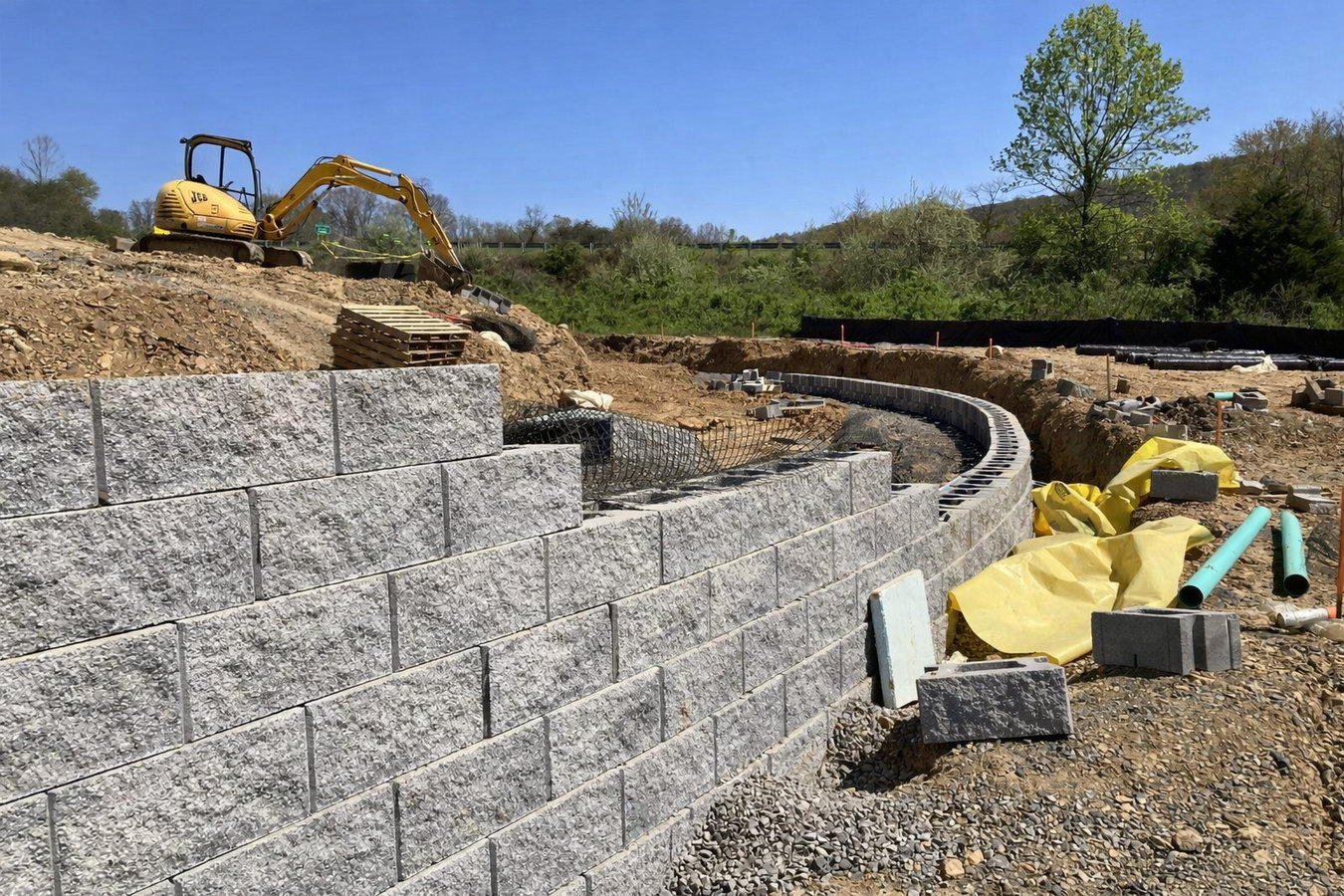
Napa slopes need walls built for clay soil, wet winters, and earthquake country - not a one-size-fits-all spec. We design, permit, and build retaining walls that stay put.
Retaining wall construction in Napa, CA holds back soil on sloped or uneven properties, most residential walls take two to four days to build and are sized to handle local clay soil pressure, seasonal water weight, and the seismic loads this area sees.
In Napa, hillside and sloped lots are common, and without a properly built wall, that slope will move - gradually through erosion or suddenly after a heavy rain. A retaining wall is the structure that keeps your soil, your garden, and your property line exactly where they belong. It can also turn an unusable hillside into a level terrace for a patio or outdoor dining area, which adds both space and real property value.
If you are also dealing with cracked or shifting hardscaping below the slope, our masonry restoration service can address that work in the same project to save you a second mobilization.
If you notice soil creeping toward your driveway, patio, or lower yard after Napa's winter rains, that slope needs support. Small slides often get worse each season, and what starts as a cosmetic problem can eventually undermine a fence, a garden bed, or a structure. Catching it early means a simpler, less expensive fix.
A retaining wall that is visibly tilting away from the hillside, or that has developed horizontal cracks running along its length, is under more stress than it was designed to handle. In Napa, this often happens after a wet winter when clay soils have swollen and pushed hard against the wall. A leaning wall does not fix itself - it will continue to move until it fails.
If standing water collects at the bottom of a slope or along a fence line after a storm, water is not draining properly through the soil. This is both a drainage problem and a sign the slope above is holding more moisture than it should - a condition that accelerates erosion and puts pressure on any existing wall.
Many Napa homeowners have hillside properties with beautiful views but limited flat yard space. A retaining wall can carve out a level terrace for a patio, garden, or outdoor dining area. If you have been looking at a slope and wishing you could use that space, a retaining wall is how that transformation happens.
We build new retaining walls and rebuild or repair walls that have shifted, cracked, or failed. Every project starts with a site visit - no honest contractor can give you a real number without seeing the slope, the soil, and the access. We handle permit applications through the City of Napa Building Division for walls that require them, and we coordinate engineer review for taller walls that need a stamped design.
For properties where the wall is one part of a larger project, we often combine retaining wall work with concrete block wall installation or masonry restoration to handle multiple scopes in a single mobilization. That coordination reduces disruption and usually costs less than scheduling two separate crews.
Suits homeowners who want a strong, cost-effective wall with a clean, modern appearance and the option for engineered design on taller applications.
Best for homeowners who want a wall that blends with Napa's wine country landscape and older residential character, with a natural, varied appearance.
The right choice for taller walls or heavily loaded applications where maximum strength and an engineered design are required by permit.
For homeowners with an existing wall that is leaning, cracking, or has failed partially - we assess whether repair is viable or full reconstruction makes more sense.
Napa's clay-heavy soils and hillside terrain create conditions that put retaining walls under more stress than in many other parts of California. Clay soil swells when it absorbs winter rain and then shrinks when it dries out in summer - that constant movement puts extra lateral pressure on any wall holding it back. The National Concrete Masonry Association outlines why drainage design is essential to wall longevity in precisely these soil conditions. See NCMA resources. Homeowners in Benicia face similar hillside and soil challenges and benefit from the same attention to drainage and foundation depth.
Napa's seismic history adds a critical layer to wall design. The 2014 South Napa earthquake damaged retaining walls across the city, particularly ones that were built without seismic loads factored into the design. For walls over a certain height, Napa's building permit process now requires an engineer to review the design specifically for earthquake forces - not just soil weight. Scheduling construction during the dry season, between May and October, also gives newly built walls time to settle and drainage systems time to prove out before the first serious rains of the year arrive. Homeowners in Vallejo also sit in seismically active terrain and need the same engineered approach for walls on sloped lots.
We reply within one business day. We will ask a few basic questions - how long the wall needs to be, roughly how tall, and what the slope looks like - then schedule a free on-site visit. No honest contractor gives you a real number without seeing the property first.
After the site visit you receive a written estimate covering labor, materials, permit costs, and any engineer fees. If your wall will be over three feet tall, we walk you through the permit timeline for Napa and include those costs upfront - no surprises mid-project.
We submit permit drawings to the City of Napa and coordinate engineer review if required. This step can take a few weeks depending on the city's workload. We keep you updated - you should not have to chase us for news. Work cannot legally begin until the permit is approved.
Foundation trench first, then the wall itself goes up with gravel backfill and a drainage pipe installed behind it as it rises. Once complete, we backfill the soil, compact the area, and schedule the city's final inspection. You do not need to be present for that inspection - we handle it.
Free on-site estimate. Permitted work. We know Napa's terrain and soil conditions.
(707) 254-6413Water pressure is the number one reason retaining walls fail in Napa. We design gravel backfill and drainage pipe into every wall before construction begins - not as an afterthought. A wall with proper drainage outlasts an identical wall without it by decades in Napa's wet-dry climate cycle.
Napa sits near active fault lines, and the 2014 earthquake reminded everyone of that. We design walls for the lateral forces an earthquake creates, not just the weight of soil. The California Geological Survey maps Napa as a seismic hazard area, and that reality is built into our approach from day one. See CGS seismic data.
One of the most common frustrations homeowners face is finding out mid-project that a permit was required and was not pulled - leaving them responsible for fines or forced rework. We handle every permit application and city inspection from start to finish, and all permit costs are included in your written estimate before work begins.
Napa's hillside streets often have tight access, steep grades, and soil conditions that require smaller equipment or hand tools. We have worked on properties across the city's hills and know what those sites require before we show up with the wrong equipment. That local terrain experience keeps your project on schedule.
A retaining wall is mostly hidden once it is done - the drainage, the foundation depth, the backfill. That makes it easy for a less careful contractor to cut corners where you cannot see. Every detail we bury behind that wall is done to the standard your property needs when the next big rain or tremor hits Napa.
Repair and restore existing masonry structures on your property - brick, stone, and block work that has deteriorated or suffered seismic damage.
Learn MoreBuild freestanding concrete block walls for property boundaries, privacy screening, or structural separation on Napa residential lots.
Learn MorePermit season fills up fast - reach out now to lock in your project before the next rainy season puts more pressure on that slope.